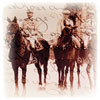
Charles William Parker was born in Scarborough, England, in June 1896. He immigrated with his family to Vancouver Island in 1910. Parker enlisted in February 1915 and served overseas with the 14th Battalion until his death on September 7, 1916. The collection currently consists of one letter, two photographs, and two miscellaneous items.
Title
WWI
These collections contains any material relating to Canada from 1914 to 1918 from either the home front or the battlefront. External links in collection descriptions are either to online attestation papers at Library and Archives Canada or casualty and burial information at the Commonwealth War Graves Commission.

James John Parker was born in Belfast, Ireland, in January 1894. He immigrated to Canada, and enlisted with the 92nd Battalion in August 1915 in Toronto, Ontario. The collection currently consists of images of his paybook, two photographs, and his certification as an Air Raid Warden during the Second World War.
William John Parker was born in Birmingham, England, in August 1878. Prior to the war he immigrated to Canada where he worked as a plumber. Parker enlisted in July 1915 in Guelph, Ontario, and served overseas with the 34th Battalion. The collection currently consists of two letters written while at Bramshott.
William Pash was born in London, England, in January 1889. Sometime prior to the war he immigrated to Brantford, Ontario, where he worked as a baker. Pash enlisted in Brantford, Ontario with the 125th Battalion and served overseas. The collection currently consists of twenty one postcards.
Lola Passmore was born in 1899 and lived in Peel County, Ontario, near the village of Huttonville. Around 1916 she and her family moved into the city of Toronto. The collection consists of twenty-two letters from her male friends from Huttonville written to her during the war. The largest portion (15 letters) is from George Henry Tripp, who was killed May 5, 1917. As well there are letters from John (Jack) Booker and his brother Alex Booker, one from George Edward Manners, and one from her uncle, Dr. James Fraser, a Major who served with the Ambulance Corps.
William Paterson was born in Leith, Scotland, in April 1893. Paterson immigrated to Canada prior to the war, and enlisted in Calgary, Alberta, in November 1914. He served overseas as a signaller with the 31st Battalion until he returned to Canada at the end of the war. The collection currently consists of six photographs and one postcard.
James Scott Pattullo was born in Forfarshire, Scotland, in August 1890. Prior to the war he emmigrated to Canada and enlisted with the 72nd Battalion in Vancouver in September 1915. Pattullo served overseas with the 72nd Battalion until his death on Mach 1, 1917. He is commemorated on the Vimy Memorial. The collection currently consists of one letter and one photograph.
Reginald John Paul was born on December 14, 1895, in Burin, Newfoundland. He enlisted on December 21, 1914, and served with the Royal Newfoundland Regiment. Paul served both at Gallipoli and on the Somme and was killed on the first day of the Somme, July 1, 1916. The collection consists of two letters from the chaplain to his family, and one photograph. Paul's service file is available online through the Provincial Archives of Newfoundland and Labrador (The Rooms).
Robert Rollo Paul was born in Lavant, Ontario, in April 1888. Paul enlisted in October 1914, in Moose Jaw, Saskatchewan. He served overseas with the 28th Battalion and returned home to Canada at the end of the war. The collection currently consists of a memoir recounting his escape from a Prisoner of War Camp.
Frederick George Pearson was born in Lancashire, England, in September 1894. He immigrated to Canada in 1909 and settled in the Red Deer District. Pearson enlisted in Calgary in July 1916 and served overseas with the 10th Battalion. The collection currently consists of his diary from 1917.
Vaughan Whitier Pearson was born in Toronto, Ontario, in 1898 and was a student at The University of Toronto when he enlisted in April 1916. He served overseas in France until the end of the war. Vaughan Pearson was the third of three sons to serve overseas, following his brothers Marmaduke and Lester, a future Prime Minister of Canada. The collection consists of six letters from Vaughan, a post card, a Christmas card, a newspaper clipping, and one photograph.
William Markle Pecover was born in Lucknow, Ontario, in October 1894 and enlisted in Winnipeg, Manitoba, with the 184th Battalion in April 1916. Pecover was wounded in 1917 and discharged in the spring of 1918 as medically unfit for further service due to his wound. The collection currently consists of more than one hundred letters from his time in the service.
Corporal Francis Pegahmagabow was born on March 9, 1891, in Shawanaga, Parry Sound District, Ontario. When war broke out, Pegahmagabow was serving with the 23rd Regiment, Northern Pioneers Militia, who were placed on active service August 6, 1914. He then went to Valcartier, Quebec where he enlisted on September 15, 1914, and sailed for England as part of the First Contingent aboard the S.S. Laurentic in October of 1914. From there he went to France on February 2, 1915, where he served with the 1st Battalion. Pegahmagabow suffered a gun shot wound in September 1916 and after treatment returned to serve with the 1st Battalion, including at Passchendaele in November 1917. Hospitalized with health issues in 1918, he was invalided back to Canada in April of 1919 and discharged in Toronto, Ontario on May 13, 1919.
External links:
Corporal Francis Pegahmagabow’s service record (Serv/Reg# 6846) can be viewed/downloaded in pdf format through Library and Archives Canada.
Corporal Pegahmagabow’s notice for the awarding of his Military Medal (M.M) can be found in the London Gazette (LG 29608 3/6/16 page 5599).
“For continuous service as a messenger from February 14th 1915 to February 1916. He carried messages with great bravery and success during the whole of the actions at Ypres, Festubert and Givenchy. In all his work he has consistently shown a disregard for danger and his faithfulness to duty is highly commendable.”
Corporal Pegahmagabow’s notice for the awarding of a Bar to his M.M. can be found in the London Gazette (LG 30573 13/3/18 page 3223).
“At Passchendaele Nov. 6th/7th, 1917, this NCO [non-commissioned officer] did excellent work. Before and after the attack he kept in touch with the flanks, advising the units he had seen, this information proving the success of the attack and saving valuable time in consolidating. He also guided the relief to its proper place after it had become mixed up.
Corporal Pegahmagabow’s notice for the awarding of a second Bar to his M.M. can be found in the London Gazette (LG 31173 11/2/19 page 2081).
"During the operations of August 30, 1918, at Orix Trench, near Upton Wood, when his company were almost out of ammunition and in danger of being surrounded, this NCO went over the top under heavy MG [machine gun] and rifle fire and brought back sufficient ammunition to enable the post to carry on and assist in repulsing heavy enemy counter-attacks."
Corporal Pegahmagabow was the most highly decorated Aboriginal soldier in Canada. The M.M. with two Bars was awarded to less than forty Canadian soldiers in World War One. He was also considered to be the deadliest sniper in the war. Further information about his life is available at Veterans Affairs.
Content notes:
We have used the birthdate of 1891, which is found on his attestation papers, although elsewhere there are references to it as 1889.
The original letter is housed in the Saskatchewan Military Museum and is used with their kind permission.
John Jenkins Penhale, DSO, was born in Cornwall, England, in February 1866. He was a mining engineer who settled in Sherbrooke, Québec, prior to the war. Penhale served overseas as the Lieutenant Colonel of the Divisional Ammunition Column of the CEF until his demobilization in 1919. The collection currently consists of one Christmas card from 1914.
Lieutenant Cullen Hay Perry was born in Whitby, Ontario to parents John Ham Perry and Louisa Hay Perry on August 15, 1893.
Perry enlisted at Valcartier, Quebec on September 22, 1914. Prior to that, Perry had served for one year with the militia in Cobourg, Ontario. He sailed to England in October 1914 aboard the SS Tunisian as part of the First Contingent and served with the 3rd Battalion, Queen’s Own Rifles, in France. In June 1915 Perry took a commission in the British Imperial Army and was attached to the Royal Fusiliers as a Second Lieutenant and from there transferred to the Royal Flying Corps. He was sent to Egypt in October of 1917 and was killed in an accident on February 3, 1918. Perry is buried in the Alexandria (Hadra) War Memorial Cemetery in Alexandria.
External links:
Lieutenant Cullen Hay Perry’s CEF service record (Serv/Reg# 10161) can be viewed/downloaded in pdf format through Library and Archives Canada.
Burial information for Perry is available at the Commonwealth War Graves Commission.
A memorial page honouring Perry can be visited online at the Canadian Virtual War Memorial.
Perry’s Royal Flying Corps record can be downloaded from the National Archives in Britain. A free registration is required to access the materials.
Collection note:
The collection consists of seven letters written home to his mother in Whitby, Ontario, as well as one photograph. The original letters can be found in the Whitby Archives, Whitby, Ontario.
[Editor’s note: Collection reviewed/updated January, 2026. Scans of the original letter photocopies have been added. Additional information added to content description and additional external links added.]
John Phillips was born in Vernon, British Columbia, in October 1894, and later moved to Lasqueti Island, British Columbia. Phillips was drafted in November 1917, undertook his medical examination in Nanaimo, British Columbia, in March, 1918, and arrived in England in May 1918. He joined the 7th Battalion in France on October 2, 1918, and was killed 10 days later on October 12, 1918. The collection currrently consists of two photographs.
Second Lieutenant Alfred James Pickup was born in Croydon, Surrey, England, on October 21 1887, to parents James and Louisa Pickup. After immigrating to Canada in April of 1912 he worked as bank clerk in Ladysmith, British Columbia, before moving to Victoria, B.C.
With the outbreak of war he returned to England in September 1914, where in December he was commissioned as an officer with the 13th Battalion, Hampshire Regiment, British Expeditionary Force. He was serving with the 2nd Battalion, Yorkshire Regiment, when he was killed in the Battle of Loos on September 26, 1915. Pickup is commemorated on the Loos Memorial, at Pas de Calais, France.
The letters in the Pickup Collection were published in the Ladysmith Chronicle newspaper and were compiled, along with those of other local WWI soldiers, through the work of the Ladysmith & District Historical Society (links shown below).
The complete list of soldiers in the can be found in the Ladysmith and District Historical Society collection.
External links:
A member of the British Army, 2/Lt. Alfred JamesPickup (Serv/Reg# 1794) does not have a publicly available service record.
Burial information is available at the Commonwealth War Graves Commission.
A collection of WWI soldiers' letters published in The Ladysmith Chronicle was undertaken by the Ladysmith & District Historical Society through their work with the Ladysmith Archives.
Albert Edmund Pinder was born in North Toronto, Ontario, in November 1892. Pinder enlisted in Guelph, Ontario, in December 1915. He served overseas during the war until his return to Guelph. The collection currently consists of six postcards written by Pinder.
Donald Elwood Pinder was born in Guelph, Ontario, in 1924. During WWII he served in the Merchant Marine, as well as in the Canadian Navy. Pinder served on the Nipigon in convoys in the North Atlantic, and for a short time on the Haida. The collection currently consists of numerous photographs and documentation from his time in the navy.
Henry Errol Beauchamp Platt, known as Errol Platt, was born in London, Ontario in May 1891. When war broke out he took a commission with The Queen's Own Rifles in Toronto, and then proceeded overseas with the 35th Battalion. Platt was serving with the 3rd Battalion at the time of his death on May 5, 1916. He is buried in Lijssenthoek Military Cemetery in Belgium.
The collection consists of 83 letters, 3 photographs, and other miscellaneous items.
Within the letter collection, the main correspondents are:
Fern McIntyre, sweetheart/fiancée
Helen Platt (“Nennie”), mother
Arthur Thomas Platt, father,
Catherine Platt (“Kae”), sister
Madeline Platt (“Molly”), sister
Lieutenant George Lawrence Bisset Makenzie, close friend/fellow soldier
Additional remembrances of Lieutenant Platt can be found at both the The Canadian Virtual War Memorial and The Great War Law Student Memorial Project (pg 112).
Note: The original handwritten letters have been lost but typed transcriptions were made sometime after the war. It is the scans of these typed copies that have been included with each letter.